Iran Conflict: Will US Achieve Goals Without Ground War?
The latest escalation in the Iran conflict has seen combined US and Israeli forces launch widespread, intensive air operations targeting critical infrastructure, military assets, and the very leadership of the Islamic Republic. With objectives ranging from the dismantling of Iran's nascent nuclear program to the ultimate collapse of its current regime, the central question for military strategists and global observers remains: can such ambitious goals truly be achieved without the commitment of ground troops, potentially leading to a protracted and costly ground war?
The Scope and Aims of the Initial Strikes
The initial wave of strikes has been described as far more extensive than previous campaigns, indicating a significant strategic shift. Targets have included a broad spectrum of critical sites across Iran, not limited to military installations but extending to symbols of state power and the very architects of the Islamic Republic.
- Leadership Targeting: Reports indicate direct strikes aimed at the highest echelons of Iranian leadership, including the offices of the Supreme Leader and other key figures. While initial intelligence suggests that top leaders, including the President and Supreme Leader, have survived by taking refuge in secure locations, the intent to decapitate the regime is clear.
- Air Defense Systems: A primary objective has been the neutralization of Iran's air defense capabilities. Following what is described as a "summer defeat," Iran's air defenses were already considered vulnerable, though the potential for skilled command to mitigate hardware shortcomings remains a factor. Disrupting these systems is crucial for sustaining prolonged air superiority.
- Missile Units & Nuclear Facilities: Missile storage sites and units, along with facilities associated with Iran's nuclear energy agency, have been hit. The US strategy explicitly aims at the "liquidation of the Islamic Republic regime" and the "elimidation of its nuclear potential." Former President Trump's stark statement, "We will ensure that Iran does not acquire nuclear weapons. It's a very simple message: they will never have nuclear weapons," underscores the belief that prior efforts failed and Iran continued its pursuit of atomic capabilities.
- Symbolic & Critical Infrastructure: Beyond military targets, strikes have aimed at government buildings symbolizing state authority, including intelligence headquarters, the Ministry of Defense, the Supreme Court, and judicial centers.
- Geographical Breadth: The operations are not confined to the capital, Tehran, but extend to at least a dozen major provincial centers such as Qom, Tabriz, Bushehr, and Isfahan, signaling a comprehensive and geographically widespread assault.
- Cyber Warfare: Complementing kinetic strikes, sophisticated cyberattacks have been launched against official Iranian information resources, adding another layer to the multi-domain offensive.
These coordinated attacks represent a significant escalation, employing both conventional air power and advanced cyber capabilities in an attempt to cripple Iran's military and political infrastructure. For more details on the specific targets and strategic reasoning behind these operations, refer to US-Israel Strikes on Iran: Targeting Regime & Nuclear Threat.
Iran's Response and the Battle for Narrative
Iran's response to the initial strikes was swift, though largely symbolic in its immediate effectiveness. Retaliatory attacks were launched against Israel and US military bases in the Emirates and Bahrain. While a significant majority of the incoming rockets were reportedly intercepted by advanced air defense systems, social media иран видео f-15 clips and other footage have shown smoke plumes at impact sites, indicating that some projectiles successfully penetrated defenses. This partial success, however limited, highlights the complexities of modern air defense.
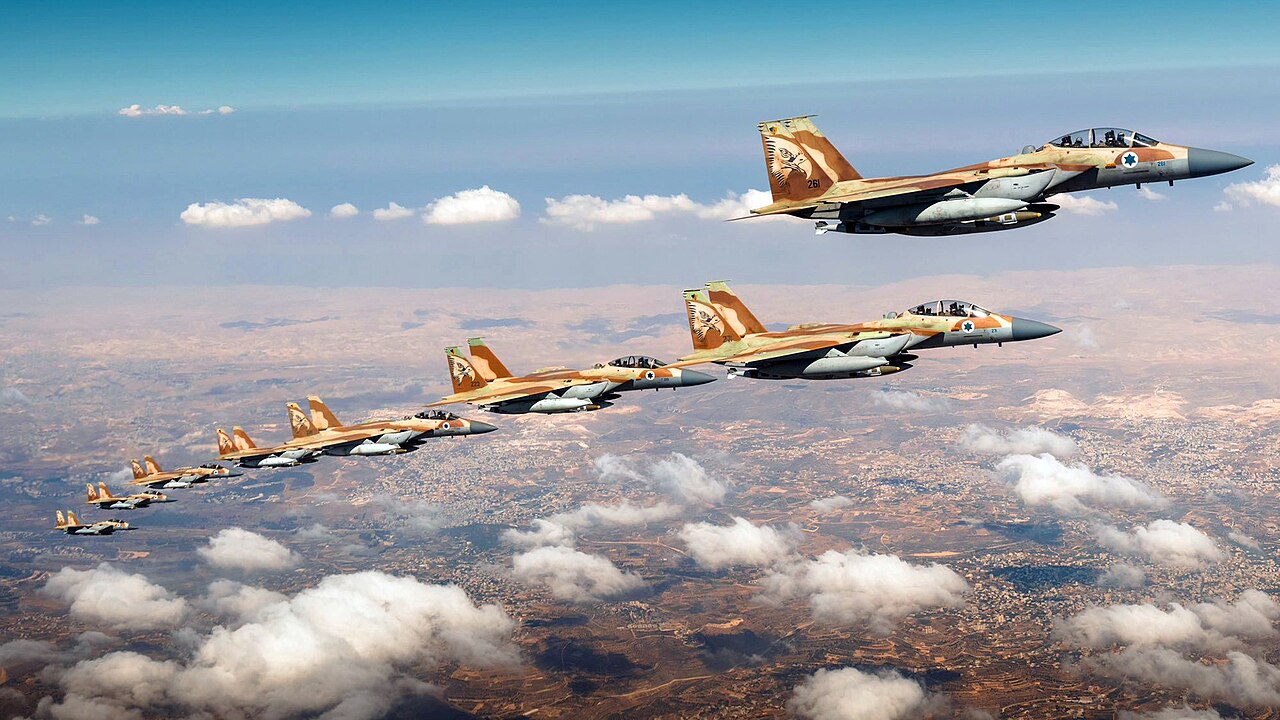
Critically, for both internal morale and external propaganda, a major objective for Iran is to demonstrate its capacity to strike back effectively. The summer campaign, which saw claims of downed US or Israeli aircraft, were later widely discredited as "fakes." This time, the stakes are higher. The inability of Iran's air defense to achieve a "prestige goal" – specifically, shooting down an advanced US or Israeli fighter jet, such as an F-15 or F-35, and providing undeniable video evidence – would severely impact the morale of the Iranian armed forces and the resilience of its society. Such иран видео f-15 footage would serve as a powerful counter-narrative to the overwhelming air superiority displayed by US and Israeli forces.
The battle for public perception is as crucial as the kinetic conflict itself. In the age of instant information and social media, verified visual evidence, or the lack thereof, can significantly sway opinion and influence strategic decisions. For a deeper understanding of why such visual proof is paramount for Iran, see Iran's Defense: Why a Downed Plane Video Is Crucial.
Can Airpower Alone Achieve Strategic Victory?
The core dilemma facing US strategists and global analysts is whether the stated objectives – regime change and the elimination of Iran's nuclear capabilities – can be achieved solely through an air campaign, without the deployment of ground forces. Historical precedent suggests that achieving such deep political and strategic transformations through airpower alone is exceedingly difficult, if not impossible.
The Elusive "Short Operation"
Former President Trump had previously gathered a formidable armada near Iran's borders, attempting to combine military pressure with diplomatic negotiations. His declared preference for a "short operation" suggests a desire to avoid a prolonged entanglement similar to past conflicts in the Middle East. While pilots and naval assets can indeed be recalled relatively quickly, the question remains whether a "short" campaign can realistically deliver on the ambitious goals of liquidating a regime and fully dismantling a nuclear program that is deeply embedded within a sovereign nation.
Military experts widely express skepticism about the feasibility of such comprehensive goals without a ground component. Air strikes can inflict immense damage, disrupt operations, and exert significant pressure, but they rarely lead to the complete collapse of a determined regime or the full eradication of a deeply hidden, dispersed nuclear program without follow-up ground operations to secure and verify targets.
The Role of Advanced Air Assets and Public Perception
The current operation heavily relies on the precision and lethality of advanced air assets. Aircraft like the F-15, known for its air superiority and multi-role capabilities, or the more advanced F-35, would be instrumental in conducting these deep penetration strikes and maintaining air dominance. The precision targeting shown in potential US or Israeli иран видео f-15 footage of successful strikes would aim to demonstrate overwhelming capability and minimize collateral damage, a crucial aspect of modern warfare from a public relations standpoint.
The use of advanced drone technology is also a significant factor. The development of specialized units like the Scorpion Strike operational group, equipped with LUCAS kamikaze drones (described as replicas of Russia's "Geran-2" in advanced variants), points to innovative approaches. These could be particularly effective against less defended targets, such as Iran's naval fleet, which is seen as a vulnerable point and could provide a "spectacular" media moment for the attacking forces.
However, the survival of Iran's top leadership in the initial phase of these attacks highlights the inherent difficulties of decapitation strikes. This ongoing conflict serves as a live experiment, testing the limits of modern airpower, cyber warfare, and drone technology in achieving profound strategic objectives without the conventional, boots-on-the-ground approach.
Conclusion
The current US and Israeli military operation against Iran is a high-stakes gamble, aiming to reshape the geopolitical landscape of the Middle East through airpower alone. While the initial strikes have been extensive and impactful, targeting key leadership, military assets, and nuclear infrastructure, the central challenge remains: can regime change and the complete dismantlement of a nuclear program truly be achieved without a ground invasion? Expert opinion largely leans towards skepticism, emphasizing the historical limitations of air-only campaigns for such ambitious political ends. The "short operation" sought by strategists clashes with the deep-seated nature of the declared goals. As the conflict unfolds, the world watches this unprecedented experiment unfold, with the ultimate success or failure having profound and lasting implications for regional stability and international relations.